Expert, ultrasound-guided PICC line, midline, and vascular access services across the SF Bay Area.
Searching for mobile PICC line placement or a vascular access nurse near you? We bring safe, expert, ultrasound-guided vascular access directly to your patients — at the bedside, on time, every time.
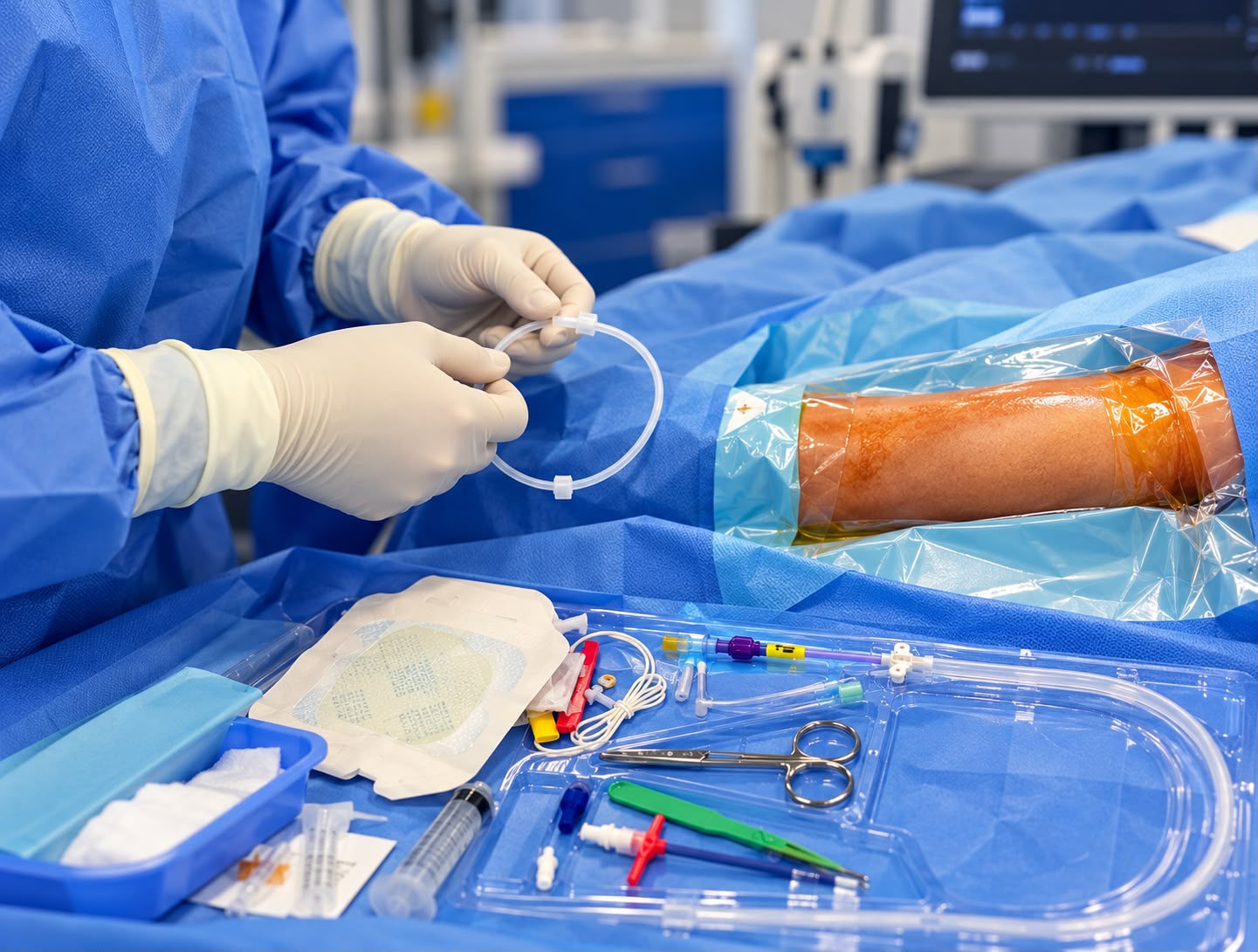
Bedside ultrasound-guided PICC insertion with ECG-based tip confirmation to verify cavoatrial junction placement in real time, without waiting for a mobile X-ray or transporting the patient.
Indications: Long-term IV antibiotics, total parenteral nutrition (TPN), chemotherapy, and repeated blood draws.
Technology & Method: Real-time ultrasound guidance paired with ECG-based tip confirmation.
Bedside Benefit: Helps facilities avoid ambulance transfers to the ER. Therapy can begin soon after placement is confirmed.
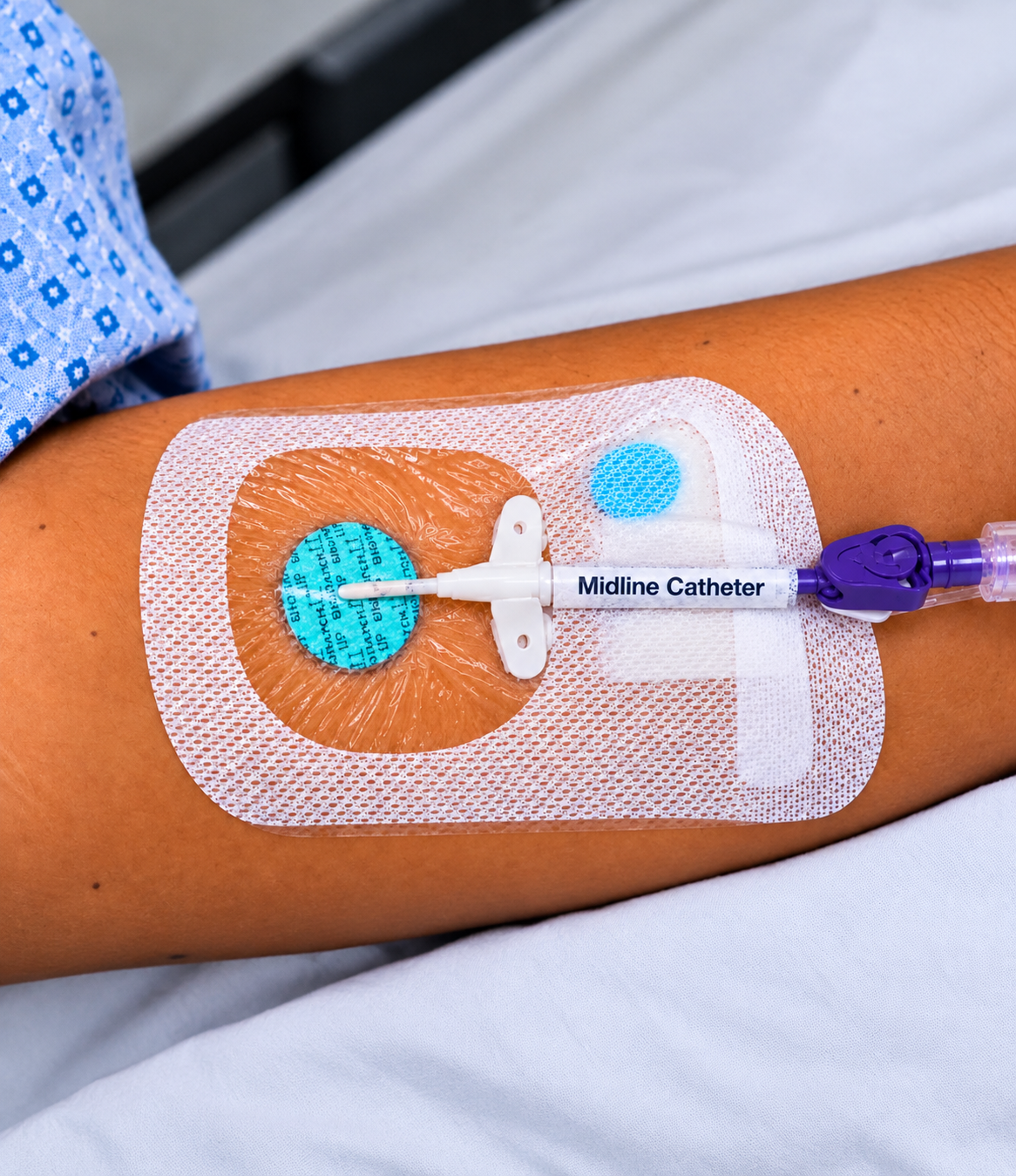
Sterile, ultrasound-guided access for therapy lasting 1 to 4 weeks. The catheter tip ends at or below the level of the axilla, so it is not a central line. This helps protect central veins and can reduce the need for central line placement.
Indications: 1–4 weeks of IV antibiotic therapy, IV hydration, difficult peripheral IV restarts, and blood sampling.
Technology & Method: Ultrasound-guided Modified Seldinger technique with a micro-introducer, for minimal vessel trauma.
Bedside Benefit: Preserves central veins and reduces painful, repeated peripheral IV restarts.
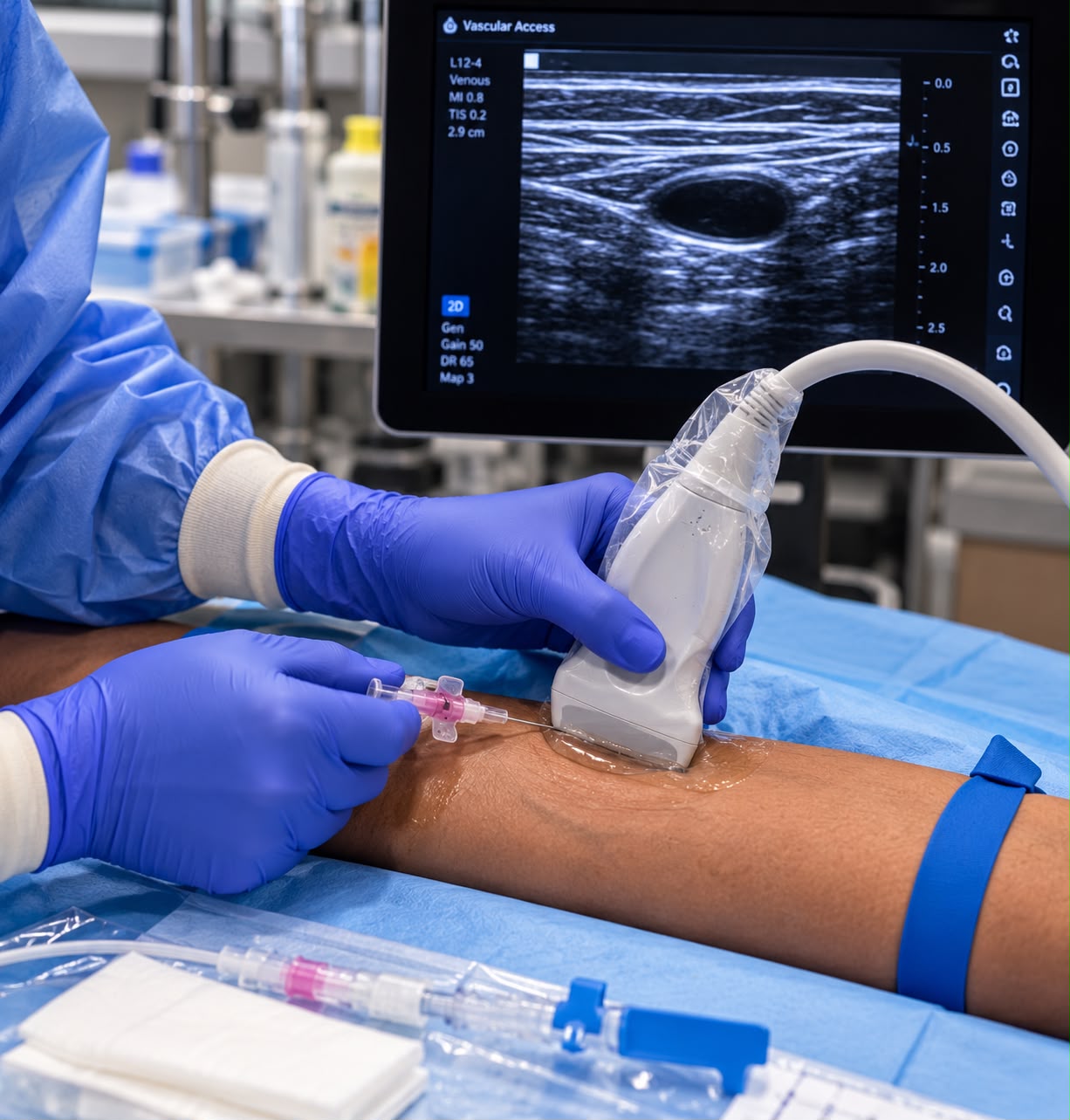
Ultrasound-guided peripheral IV placement for hard-to-access veins, chronically ill, or dehydrated patients with deep, collapsed, or fragile vessels.
Indications: Multiple failed attempts without ultrasound, severe dehydration, edema, veins affected by chemotherapy, and urgent hydration needs.
Technology & Method: Real-time ultrasound to assess vein size and depth before cannulation.
Bedside Benefit: Fewer needle sticks, which can reduce bruising, infiltration, and patient stress.
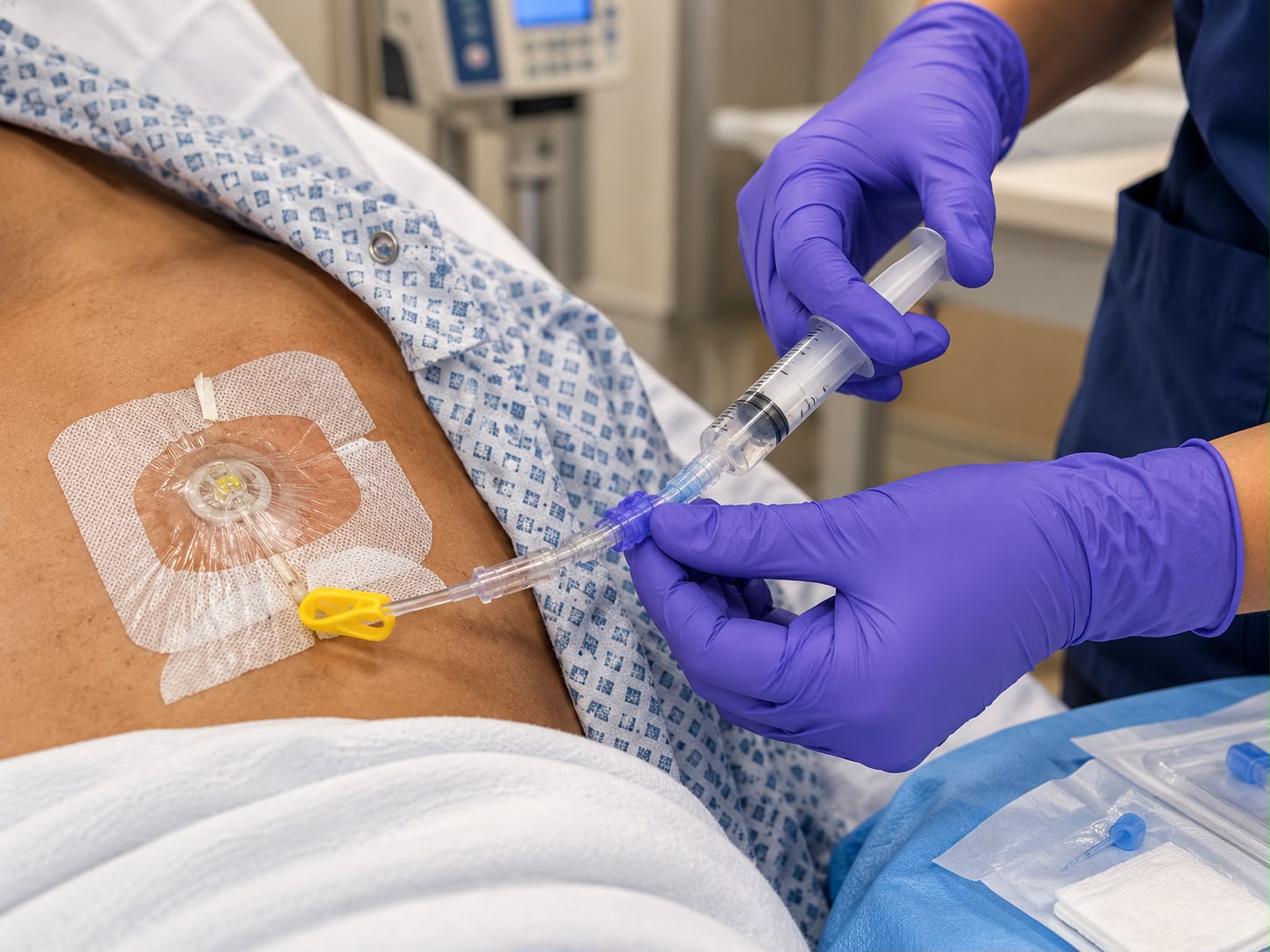
Implanted port access and bedside restoration of catheter function for sluggish or occluded central lines and midlines, using a provider-ordered clot-dissolving medication.
Indications: Port access for infusions or blood draws, sluggish blood return, partial or complete catheter occlusion, and resistance when drawing back.
Technology & Method: Sterile non-coring needle port access and negative-pressure instillation technique, following aseptic practice and dwell protocols.
Bedside Benefit: Can restore line function at the bedside, helping avoid early catheter removal and re-insertion.
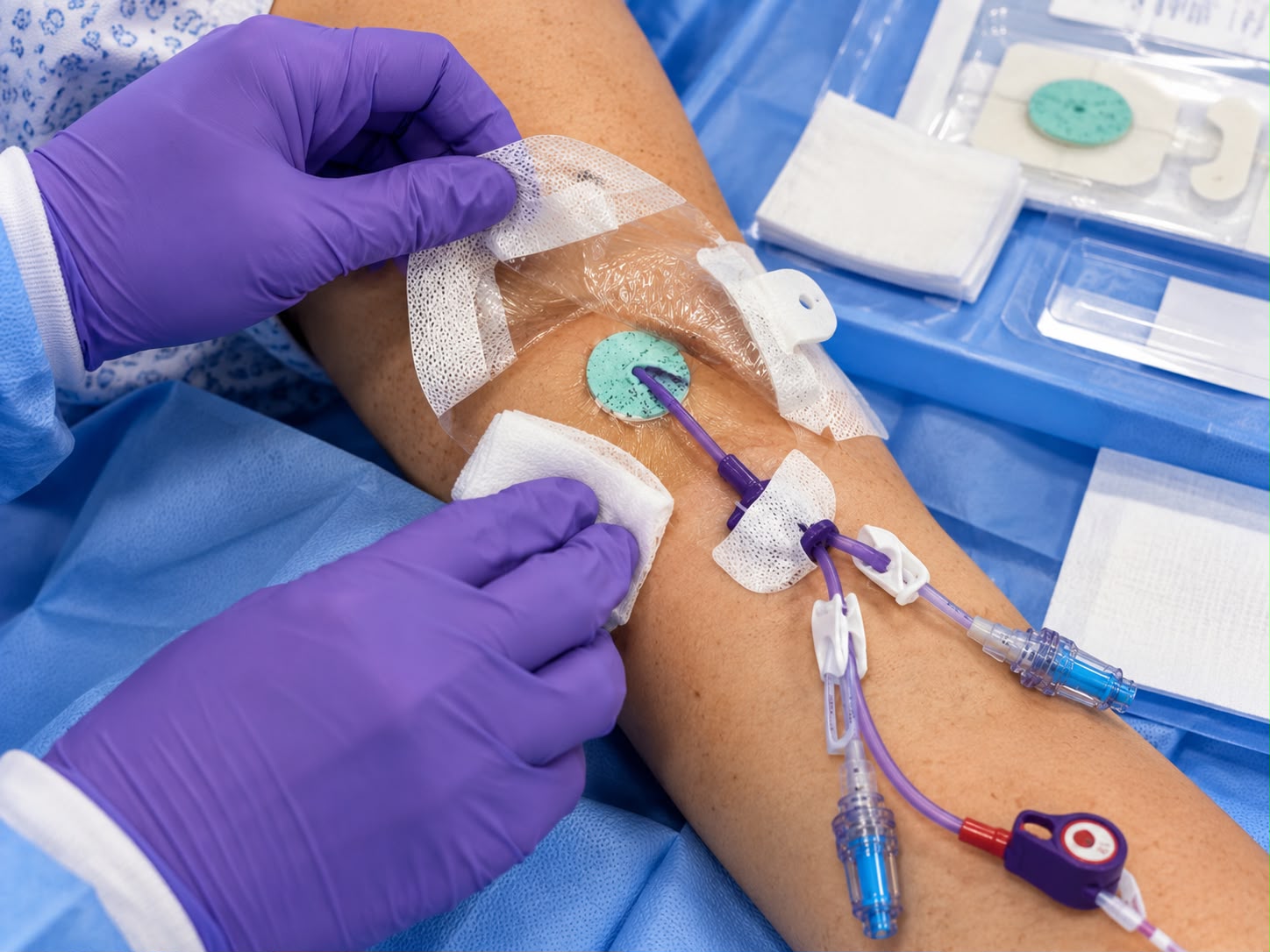
Sterile dressing changes, securement replacement, and routine central line maintenance following Infusion Nurses Society (INS) standards, plus bedside external lumen repair per manufacturer instructions.
Indications: Routine dressing changes (every 7 days for transparent dressings), soiled or loose dressings, external lumen tears, or broken clamps.
Technology & Method: Antiseptic skin prep, antimicrobial dressings, and catheter securement devices.
Bedside Benefit: Supports strict aseptic technique and helps reduce the risk of infection, dislodgement, and accidental pullouts.
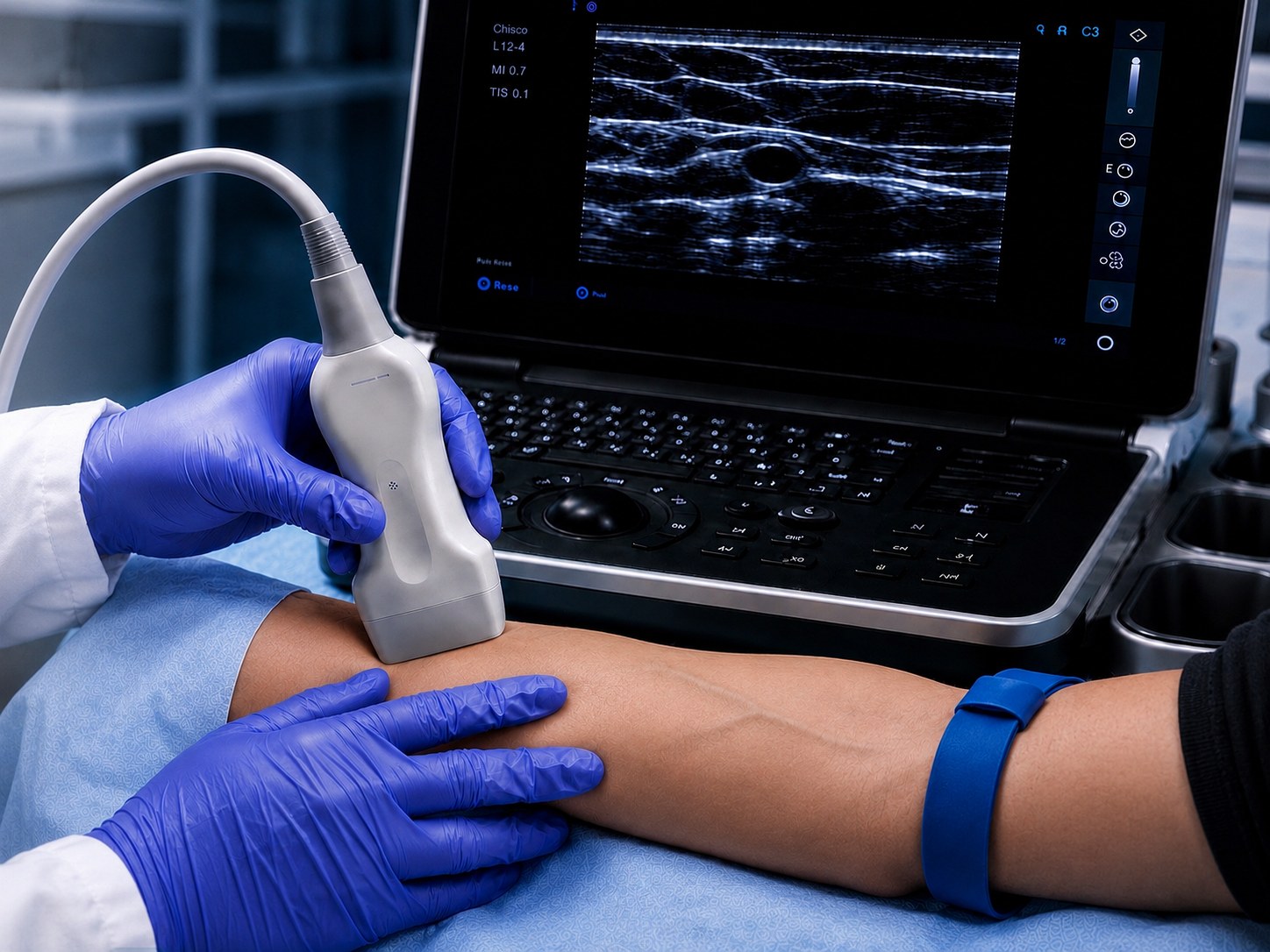
Bedside ultrasound vein assessment to check vein size, depth, and patency, so you can plan the best vascular access before starting long-term or vesicant infusion therapy.
Indications: Pre-chemotherapy planning, vein preservation for patients with chronic kidney disease, and a history of repeated access failure.
Technology & Method: High-frequency ultrasound to measure veins and choose a catheter size that fits (catheter-to-vein ratio).
Bedside Benefit: Helps choose the right device from the start, which can lower thrombosis risk and early device failure.
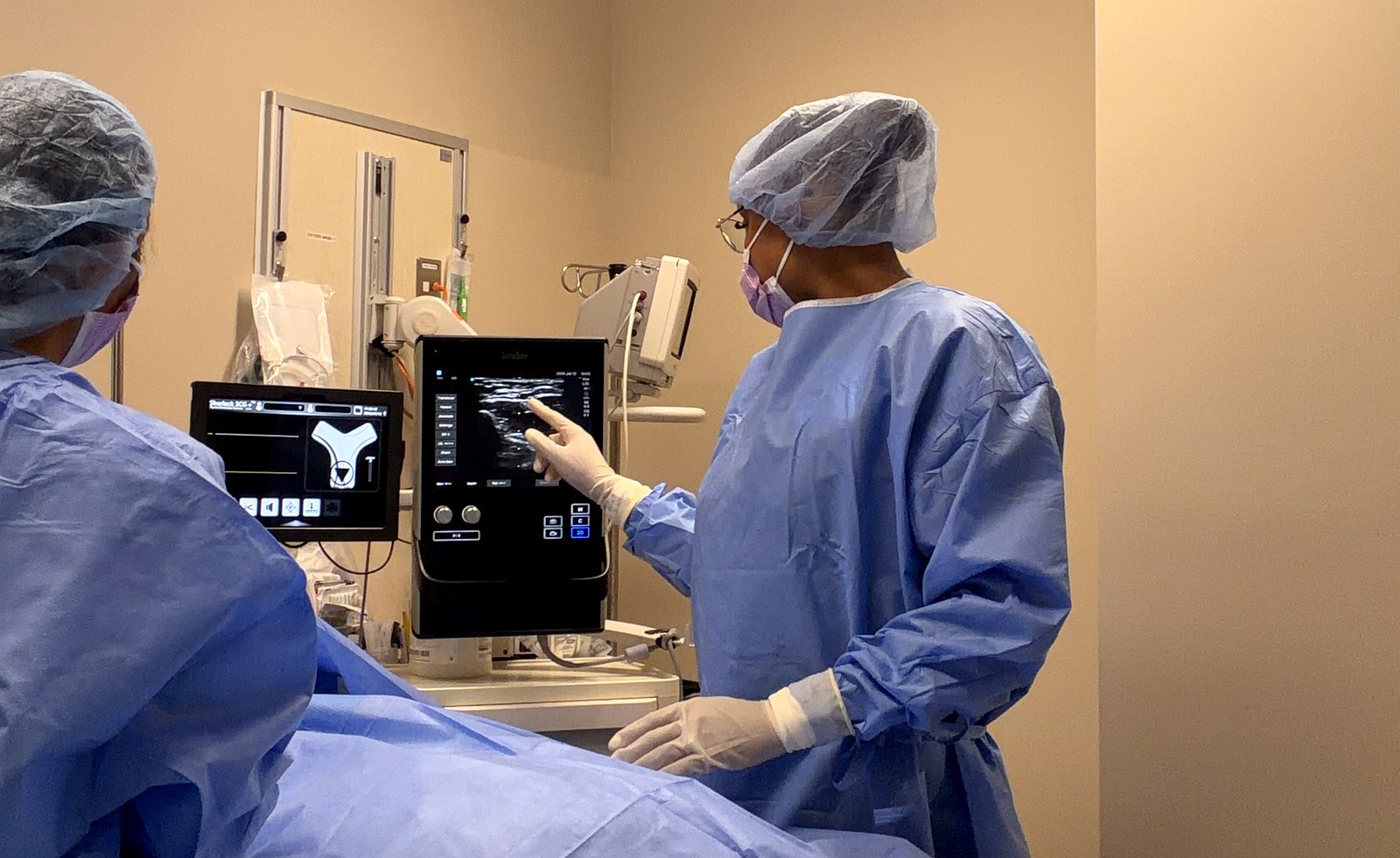
We use real-time ultrasound guidance for every vascular access procedure — visualizing veins and navigating safely. For PICC lines, we confirm tip placement at the bedside with ECG-based technology. No guesswork. No delays.
First-Stick Success
Real-time visualization dramatically increases first-attempt placement rates
Fewer Complications
Ultrasound guidance reduces arterial puncture, nerve injury, and failed placements
Bedside Tip Confirmation
ECG-based technology confirms PICC tip placement without waiting for a chest X-ray
We are a trusted extension of your clinical team — responsive, reliable, and deeply skilled.
Send a Referral →
A PICC line (Peripherally Inserted Central Catheter) is used for long-term intravenous treatments requiring reliable venous access, including extended IV antibiotic courses, total parenteral nutrition (TPN), chemotherapy, and frequent blood draws without repeated needle sticks.
The key difference is catheter length and tip location. A PICC line is a central line terminating at the cavoatrial junction near the heart for long-term therapies. A midline catheter terminates in the upper arm below the axilla for intermediate therapies lasting 1 to 4 weeks, avoiding central line CLABSI complications.
No, a midline catheter is not a central line. Because its tip rests below the axillary line in the peripheral vasculature rather than the central chest veins, it preserves central venous capital and carries a lower risk of bloodstream infection.
For patients with deep, rolling, fragile, or collapsed veins, our nurses use real-time ultrasound guidance. Ultrasound shows vessel size and depth, which improves first-attempt success and helps avoid painful repeated blind sticks.
Yes. We provide bedside assessment and declotting of occluded catheters using an approved declotting medication, per physician order, to restore line function — often without replacing the catheter.
Every insertion follows a CLABSI prevention bundle aligned with CDC guidelines and INS Standards:
We also educate facility staff and patients on line care, including scrubbing the hub before every access.